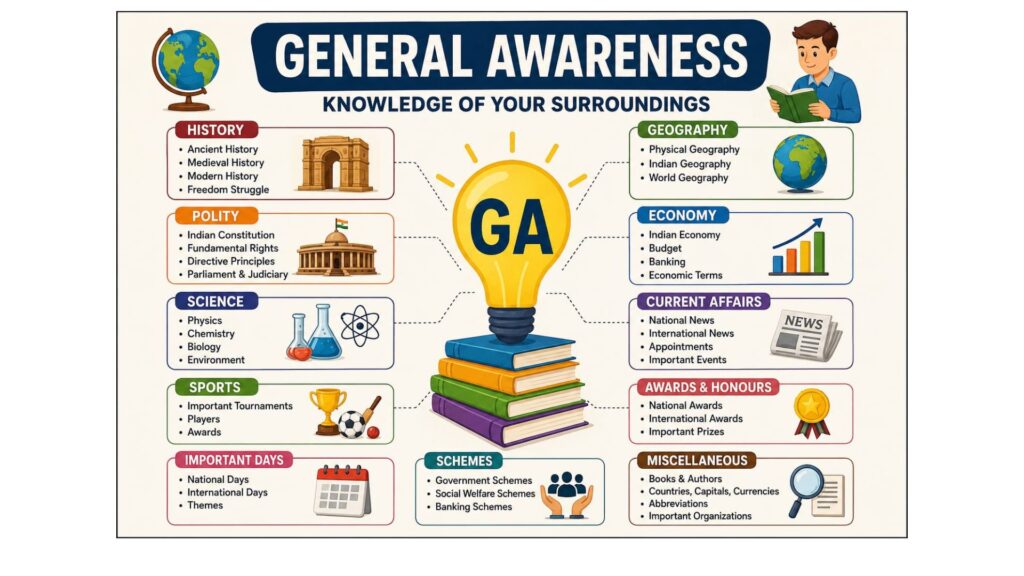
If you still open a thick textbook and try to memorize endless pages of facts line by line, your study methods are outdated. Preparing for competitive examinations like UPSC, SSC, Banking, or state public service commissions requires efficiency. The volume of syllabus you need to cover grows every month, especially when you factor in daily current affairs, static General Knowledge (GK), national reports, and international developments.
The top 5 AI tools are transforming how candidates prepare for competitive examinations like UPSC, SSC, and Banking. Instead of spending hours skimming textbook pages and searching endless website links, modern aspirants use smart platforms to simplify research and structure their daily learning. Building a reliable digital workflow allows you to digest complex General Knowledge, summarize long policy documents, and test your recall without losing valuable study time.
Finding the top 5 AI tools that fit your specific learning style can completely change how you approach competitive exam preparation. Rather than feeling overwhelmed by endless current affairs materials and static textbook chapters, using the top 5 AI tools helps you organize your study hours with far greater clarity and focus.
Successful candidates in 2026 are not necessarily studying more hours than everyone else. Instead, they use artificial intelligence to streamline research, organize information, and revise faster.
However, many students misinterpret how to use these technologies. They treat AI as a shortcut to bypass learning, asking basic chatbots to write quick answers without understanding the underlying concepts. That approach leads to weak retention and poor performance in exams.
Using AI correctly means building a reliable workflow that acts as a study partner. It helps you verify facts, condense massive documents, convert notes into active recall quizzes, and retain complex data long term.
Why AI is Essential for GK Preparation in 2026
In the past, studying a complex current affairs topic meant performing a web search, opening dozens of tabs, sifting through sponsored links, filtering out opinion pieces, and painstakingly drafting handwritten summaries. That initial research phase alone often took hours before actual learning began.
AI handles that preliminary legwork in minutes. Think of AI as an accelerator for information processing. Calculators did not eliminate the need to understand mathematics; they simply removed tedious manual arithmetic so people could solve higher-level problems. Similarly, AI does not replace critical thinking or conceptual understanding. It eliminates manual clutter so you can spend your time analyzing, understanding, and revising key facts.
Instead of spending your evenings collecting data, you can now focus entirely on mastering it.
The 4-Step AI Workflow for GK Study and Note-Making
To get real value from AI tools without relying on low-quality output, follow a structured four-step study process.
Step 1: Topic and Event Breakdown
When a major current affairs event occurs, avoid jumping straight into memorizing random facts. Ask an AI tool to break down the topic into its core components: background context, key figures, official reports, affected regions, and potential exam significance.
Step 2: Logical Outline Generation
Before building your study notes, request a clear structure. A logical hierarchy helps your brain organize information. Group the data into historical background, statistical updates, core policies, key takeaways, and potential multiple-choice question angles.
Step 3: Targeted Section-by-Section Research
Never ask an AI tool to generate a comprehensive 2,000-word study guide in a single prompt. Broad prompts lead to vague generalizations and missed details. Instead, query the tool section by section. Ask specifically about dates, statistical figures, amendments, or committee recommendations to ensure precision.
Step 4: Self-Assessment and Summary Creation
Once you understand the main text, use AI to generate concise summary points and targeted practice questions. Converting raw data into short-answer prompts or quiz questions tests your comprehension before move on to the next topic.
Combining the top 5 AI tools into one cohesive workflow allows you to delegate preliminary research tasks so you can focus on actual retention. Each application among the top 5 AI tools serves a specific purpose, whether that involves verifying recent economic data, condensing government reports, or generating daily flashcards for active recall.
Top 5 AI Tools to Master General Knowledge in 2026
1. Perplexity AI: Real-Time Fact Research and Verification
Traditional search engines return pages of links, requiring you to read through multiple sites to confirm a single statistic. Perplexity AI operates as a conversational search engine that provides direct answers backed by real-time web citations.
For General Knowledge aspirants, accuracy is critical. An incorrect date or misquoted statistical ranking in an exam answer can cost valuable marks. Perplexity AI pulls data from official government portals, press information bureaus, and established research institutes, referencing its sources clearly.
How to use it for GK:
When studying national economic indices or government initiatives, query the tool for precise summaries. For instance, if you need an update on regional investment performance, ask for a breakdown of recent official reports along with the key metrics and top-performing states. The tool brings back clean, structured data directly linked to official releases, cutting research time significantly.
2. Google NotebookLM: Summarizing Long Reports and Editorials
Covering current affairs requires reading lengthy policy papers, monthly compilations, and daily newspaper editorials. Processing dozens of pages every day quickly leads to cognitive overload.
Google NotebookLM is designed specifically to work with your uploaded documents. You can upload PDFs of government reports, historic documents, or monthly current affairs magazines into a private workspace. The system then answers questions strictly based on the source files you provided, eliminating the risk of unverified information.
How to use it for GK:
Upload a complex 40-page report or a collection of daily editorial PDFs. Request a high-level summary listing key decisions, committee recommendations, and historical precedents. You can also ask it to convert the uploaded text into practice questions or simple explanatory overviews that you can review during your commute.
3. Anki with AI Extensions: Retaining Facts with Spaced Repetition
Gathering information is only half the battle; retaining it long term is where most candidates struggle. Memory fades quickly without scheduled revision. Anki is an open-source flashcard program built around active recall and spaced repetition algorithms.
While Anki has long been a staple for serious students, manual flashcard creation used to be time-consuming. With modern AI integrations, you can instantly turn your digitized study notes or current affairs summaries into formatted flashcards.
How to use it for GK:
When reading about major global events—such as international summit locations, treaty signatories, or sports milestones—feed the verified text into an AI flashcard generator. Import the generated question-and-answer pairs into Anki. The app will schedule periodic reviews based on how easily you remember each detail, ensuring facts stay fresh right up to exam day.
4. Claude by Anthropic: Simplifying Complex Legal and Static Topics
Static General Knowledge includes complex subjects like constitutional law, macroeconomic theories, historical timelines, and international treaties. Understanding the nuances behind acts, amendments, and legal precedents requires clear explanations rather than simple bullet points.
Claude excels at processing complex texts and rephrasing them into clear, accessible language. It maintains context exceptionally well over long conversations, making it ideal for deep-dive study sessions on intricate topics.
How to use it for GK:
If you find a specific constitutional amendment or financial policy difficult to grasp, paste the text into Claude. Ask the tool to explain the concept using real-world analogies, step-by-step breakdowns, and historical context. Once you understand the underlying structure, remembering the associated facts becomes much easier.
5. ChatGPT: Generating Customized Practice Quizzes
Active testing is one of the most effective learning techniques for any competitive exam. Passively reading notes creates an illusion of competence, but attempting to answer targeted questions exposes real gaps in your knowledge.
ChatGPT serves as a versatile practice assistant. While you should double-check facts against primary sources, it is exceptionally useful for framing questions, generating practice scenarios, and testing your recall under different difficulty levels.
How to use it for GK:
After finishing a chapter on modern history, world geography, or current national schemes, paste your notes into ChatGPT. Ask it to generate ten multiple-choice questions with varying difficulty levels, complete with detailed explanations for each correct and incorrect option. Attempting these custom quizzes helps solidify your understanding and highlights areas that require further review.
Conclusion
Technology will not do the hard work of learning for you, but it can remove the operational bottlenecks that slow you down. By combining structured research tools like Perplexity AI, document analyzers like NotebookLM, long-term memory apps like Anki, and conversational assistants like Claude and ChatGPT, you create a powerful study framework.
Relying on the top 5 AI tools is not about cutting corners or avoiding deep work. When used correctly, the top 5 AI tools simply streamline administrative tasks so you can devote your energy to critical thinking, conceptual clarity, and consistent revision.
Integrating the top 5 AI tools into your daily study routine requires a intentional strategy rather than random usage. When you use these top 5 AI tools together, each application handles a distinct part of your learning process, from initial fact checking to long term memory retention. Using the top 5 AI tools effectively ensures that your competitive exam preparation remains structured, accurate, and aligned with your target goals.
Focus on using these tools to clarify concepts, organize complex reports, and test your memory consistently. Master this modern workflow, and you will stay well ahead in your General Knowledge preparation.